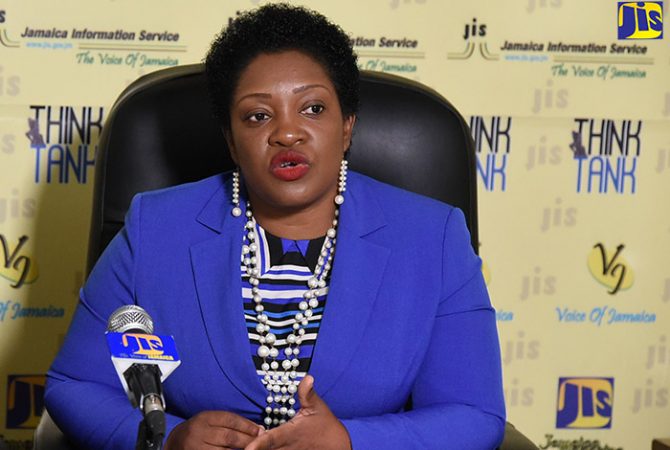
Parenting Support Helplines Assisting Parents in Recovery Process

The National Parenting Support Commission, (NPSC), has expanded its helpline network to provide additional support to parents affected by Hurricane Melissa. This is part of NPSC’s ongoing efforts to ensure that parents receive timely psychosocial and practical guidance throughout the recovery period.

For immediate support, the parenting support helplines can be reached at (876) 788-5606, (876) 854-9010, (658) 213-2631 and (658) 213-2625. All numbers are fully operational and staffed by trained professionals who provide assistance, referrals to essential services and guidance on managing challenges in the aftermath of the hurricane. Parents can also reach out via WhatsApp text messaging using any of these numbers.

Chief Executive Officer Ms. Kaysia Kerr stated that the expansion reflects NPSC’s commitment to supporting parents as they rebuild and adapt to changing circumstances.

“In times of crisis, parenting becomes even more complex. The NPSC is ensuring that parents are not navigating this period alone. Our helplines offer a space to talk, seek guidance and be connected to resources that support both emotional and practical recovery,” said Ms. Kerr.

The helplines operate Monday to Friday from 8:00 a.m. to 5:00 p.m. They provide a safe space to seek guidance and support in navigating post-disaster stressors. Parents are encouraged to contact the helplines for assistance or to share information that may benefit others within their network.

NPSC Seeks to Introduce Accreditation Framework for Parenting Support Services

Kingston, Jamaica – The National Parenting Support Commission ,(NPSC), seeks to introduce an Accreditation Framework to strengthen and standardise parenting support services across Jamaica. The framework is designed to ensure parents have reliable access to effective and evidence-based programmes that support parents in their role.

The framework establishes national standards for organisations and practitioners offering parenting programmes and support services. It  provides guidance for programme objectives, governance, ethical practices and overall effectiveness. The NPSC will oversee the process, which is intended to promote consistency, accountability and ongoing improvement in programme delivery.

Parenting support services have historically varied in approach and quality, which has led to inconsistent access, particularly for parents who are in underserved communities. The framework is intended to address these gaps by ensuring services meet national standards, align with best practices, and contribute to strengthening parental capacity and improving outcomes for children.

The Accreditation Framework benefits both parents and service providers. Parents can access programmes that meet recognised standards, while providers receive guidance, training opportunities and recognition. Providers seeking accreditation will participate in a structured review process that examines programme objectives, governance, ethical practices, and service delivery. Accredited programmes will be publicly recognised to provide parents with a trusted reference point and to encourage continuous improvement among providers.

“The Accreditation Framework seeks to raise the standard of parenting support in Jamaica,” said Kaysia Kerr, Chief Executive Officer of the NPSC. “Parents deserve high-quality services, and this framework equips providers to deliver them consistently. Stronger parents build stronger parent-child relationships, which contribute to stronger communities and a stronger nation.”

The NPSC is inviting all providers of parenting support services to begin preparing for the accreditation process. Standardising service delivery and strengthening programme quality is an important step in fostering accountability, professionalism and consistent support across the sector.

NPSC Mobilising Volunteer Mentors to Drive Effective Community-Based Parenting Support

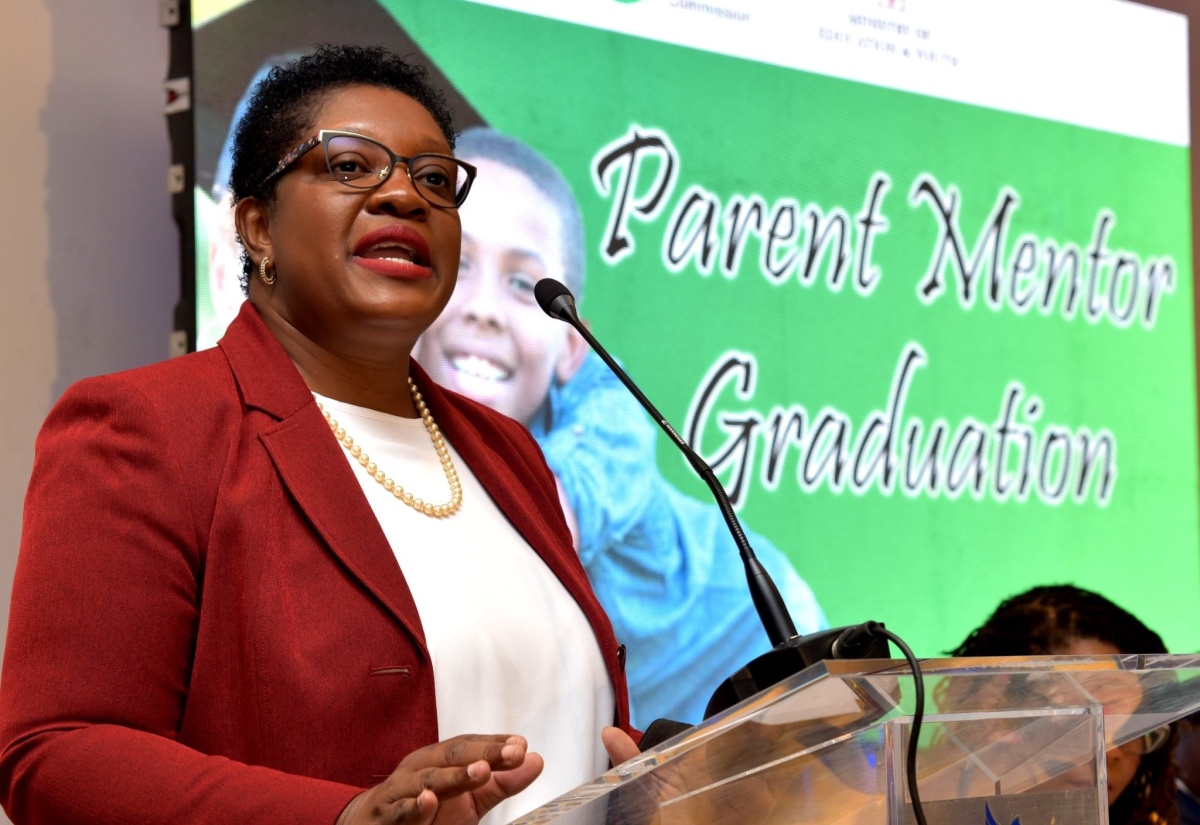
The National Parenting Support Commission (NPSC) has been successful in mobilising mentors to encourage effective parenting in their communities.

Parent mentors assist with the implementation of the Commission’s programmes and initiatives at the individual, school and community levels.

Chief Executive Officer (CEO), Kaysia Kerr, tells JIS News that the mentorship initiative is “the only programme where we have parents trained to offer this kind of support at the different levels.”

Parent mentorship is the flagship programme of the NPSC, which also offers other categories of parenting education classes.

Parent mentor leaders, who are selected from among their peers trained in this area, mobilise other mentors in their parish and share skills taught by the Commission.

Latoya Bailey-Ball is a Parent Mentor Leader from St. Thomas who has used her training to improve the relationship with her son.

“Before I became a part of the Commission, I used to parent the way I was parented. I beat my kids, shout at them and I didn’t know how to deal with anything. Since I became a part of the Commission, I realised that I was parenting incorrectly. The Commission has taught me that when you listen to your child, you will learn more,” she tells JIS News.

Through the NPSC, parent mentors see transformation in their lives at home and, thus far, they have been staying with the programme, which is one metric by which success is measured.

“One of the ways that we measure success is just the level of attrition – it is very low. Once parent mentors are trained, they tend to stay in the programme because they see their own lives being transformed. They see where they want to apply the information to be more effective in their own practice,” Ms. Kerr mentions.

The parent mentors are volunteers with various levels of skills. They find the programme empowering and are positively impacting their communities.

“We have a wide range of skill sets that enter the programme. So you have persons who might have barely finished primary school and persons who only finished high school. But we have persons up to a Master’s degree, and what we find is that it’s very empowering for all of them,” Ms. Kerr points out.

She notes that the NPSC involves persons who consider completing the programme a significant accomplishment.

“You have people who entered the parent mentorship programme and it’s the first time they would have graduated from anything. So they feel valued, and because of that, they are willing to continue their volunteerism and to give back to the programme and… their communities. They’re not changing their lives only, they`re changing the whole fabric of their community,” the CEO tells JIS News.

Speaking about her own situation, Mrs. Bailey-Ball explains that the NPSC helped her to find a solution to parenting challenges she was experiencing.

“I have a son who attended a particular high school. When he was in grade seven and eight, he was acting up. I had to visit that school every week like I was working there. One day I sat him down and asked him ‘Why are you behaving like that?’” she shares.

Mrs. Bailey-Ball notes that he recounted an incident he experienced at school that led to his concluding that he was not well-liked by a particular teacher at the institution and which had sparked his behavioral issues.

“I spoke with him and I told him – ‘remember, you don’t go to school for the teacher to love you, and you don’t go to school to like the teacher; but you have to show respect to the teacher’,” she says.

Mrs. Bailey-Ball points out that during a subsequent consultation, she was advised that her son would not be recommended to sit a critical subject in the external examinations.

Through her new-found training, she says she addressed the situation and not the child, which involved sending her son to extra lessons.

She tells JIS News that her son’s behaviour showed significant improvement in Grade nine, which later led to him being recommended for eight subjects in Grade 10.

He subsequently graduated from high school with an award for ‘Most Improved Behaviour’.

Mrs. Bailey-Ball, who has been a parent mentor for more than five years, says she is “a living testimony of the Commission”, and now shares her experience with others.

As of November 30, 2023, there are 500 certified parent mentors across the island.

The National Parenting Support Commission is an agency of the Ministry of Education and Youth.

The original article can be found here

Parents Urged To Reach Out To NPSC for Support

The National Parenting Support Commission (NPSC) is imploring parents to reach out to the entity for support to improve their parenting skills.

“We want parents to get in touch with us,” Chief Executive Officer (CEO) of the NPSC, Kaysia Kerr, told JIS News.

“We’re out in the community; we have a very sophisticated network at this point and we’re doing a lot of work through schools, and even though schools are closed to face-to-face, we’re doing a lot of work online,” she noted.

Ms. Kerr said that the Commission remains unrelenting in its thrust to promote better parenting practices, in a bid to reduce all forms of abuse against the nation’s children.

“We are very hurt by the recent spate of abuse. We are unrelenting in our efforts to ensure that we work with other agencies that have the remit to ensure the safety of children,” she said.

She noted that the NPSC will continue to sensitise parents about the ill-effects of child abuse and the need for children to grow up “in an environment where they not only survive but thrive”.

Ms. Kerr said that far too many parents are intolerant of “behaviours that are definitely normal and natural for certain ages and stages of development,” which leads to physical and emotional abuse.

“Many of the situations that are brought to the Commission, whether it’s through our workshops or training sessions or whether they are situations brought to us by… self-reporting [by parents] of frustrations, it is due to the fact that parents just don’t know,” she contended.

“Ignorance is what, I believe, accounts for much of the behaviours, because many times when we interview parents through our risk assessment to find out what the determinants of effective parenting are, we realise that they believe that they’re actually doing the right thing,” she pointed out.

Ms. Kerr noted that the NPSC remains a reservoir of information and support to parents and is appealing to them to reach out to the entity for assistance.

Meanwhile, Ms. Kerr said it is time for Jamaicans to recognise that every citizen is charged with the responsibility of protecting the nation’s children.

“Through education [the NPSC] continues the retooling process and re-education, so that we can have a cultural shift so that all Jamaicans will understand that as a collective we have a duty of care and we have a duty to protect our children,” she said.

NPSC Expands Reach to Parents

Like most other entities, the National Parenting Support Commission (NPSC) has had to change how it operates, due to the onslaught of the coronavirus (COVID-19) pandemic.

The phenomenon has, however, led to greater efficiency and an expansion of its reach to the nation’s parents.

Chief Executive Officer (CEO) of the NPSC, Kaysia Kerr, tells JIS News that the Commission has had “to pivot… to respond to this new dynamic and the global pandemic”.

In doing so, Ms. Kerr says the Commission has “totally reformatted all our programmes to ensure they are now compatible to be delivered in the online space”.

“We provide a lot of parenting education through existing programmes that we have in schools, and some are supported through communities like churches and community centres. For example, one of our major programmes is the Parent Place Programme [which has] a roving concept. So, we ensure that the material that would’ve been delivered through the Parent Place, we are now delivering those materials to the cohort of parents online,” she says.

The NPSC’s Parent Place initiative is a ‘one-stop shop’ for parenting information, skills training and support on effective parenting. It offers what is described as “21st century parenting,” through quality information and referrals, access to parenting resources and workshops.

The CEO says that while COVID-19 has been challenging in general, it has also presented the entity with several opportunities, “which we believe we are capitalising on, so much so, that we will never fully revert to how we used to deliver our programmes. We will always have the mixed modality approach”.

Ms. Kerr notes that one of the opportunities that have arisen working in the online space is that the Commission is now able “to reach way more parents faster”.

“So, instead of driving to a location with several items – we would have all these kits with  brochures and workbooks and so on – we are now doing that online and we get to do it in real time and there are no boundaries where geography is concerned,” she says.

“So, we will be talking to 60 parents from Trelawny and 20 from Westmoreland and 20 from Kingston. We do have the melting pot of persons coming together in this online space that we rather like, because it’s instant and you get to also be able to put your finger immediately on the pulse of what’s happening in several areas all at once,” she explains.

Ms. Kerr says the Commission has also listened to parents’ concerns and suggestions to serve them better during this difficult period.

She notes that the male parents have expressed that they do not want to have parenting education sessions with female parents.

 “They have said so very loudly and clearly and we had to respect that… they have no aversion to being trained and to look at new parenting practices. They are very open to improving their own practices and building their skill sets, but they don’t want to have those sessions with the women,” Ms. Kerr says.

“So, what we have done, we have created breakout rooms online, which they rather like, and they get to sit in a room by themselves virtually [where they] will be able to speak comfortably in a supportive environment where their thoughts and their experiences can also be validated. We use those experiences now as the launching pad to give them other tools, so their own practices can be improved. There are many opportunities which we have capitalised on,” she notes.

Ms. Kerr points out that it has always been the Commission’s plan to increase its presence in the online space, and the pandemic just accelerated that intention.

“What we do, we circulate materials, and before you know it, persons are gravitating to our offerings and they are signing up and they are actually showing up,” she says.

The CEO further notes that in the midst of the pandemic, the Commission has also been coordinating its programmes through other existing structures.

“We have many partners across the country, so for example, Grace and Staff Family Foundation is an awesome organisation through which we work. They have access to so many parents across the country, and so we also partner with [them]. So, they pull in their parents; they support them, whether with credit and so on, so their calling time doesn’t run out or their data plan doesn’t run out,” Ms. Kerr says.

“They offer those kinds of support to them in the online space so they can access our sessions. Once persons engage with us that way, we find that they are repeat customers, so when we have other sessions they will come. The real-time accessibility is there, plus there are other support mechanisms that enable them to access our programmes,” she adds.

The NPSC’s mission is to assist parents in developing the skills they need to raise and protect their children, while encouraging a collaborative effort between home and school, so that parents and teachers may cooperate intelligently in the education of their children.

“The National Parenting Support Commission stands ready to support parents. We really want to see the parenting landscape change,” Ms. Kerr says.

original story can be found on JIS

Self-assessment Checklist for School – COVID-19

NPSC Helpline Initiative Impacting Lives

The National Parenting Support Commission (NPSC) helplines have been operational for one year, and according to Chief Executive Officer (CEO) of the organisation, Kaysia Kerr, the initiative is still focused on making an impact on the lives of those who reach out to the agency for assistance.

“We do not get caught up with the uptake in terms of the number of calls, which is still under 1,000 a year later. We realise that one call does not serve one person, one call serves several members in a household, which means the impact of one call extends beyond the immediate,” Ms. Kerr tells JIS News.

“So when somebody calls, for example, to say they are having whatever challenge and the challenge is resolved, it redounds to the benefit of the household,” she adds.

The helplines, which went live on April 6 of last year, were established in partnership with the Victoria Mutual (VM) Foundation, United Nations Children’s Fund (UNICEF) and the Fight for Peace organisation.

The NPSC, through its helplines, offers psychosocial support to parents across the country who are having challenges navigating the ‘new normal’, due to the COVID-19 pandemic.

“What I like about the helplines is that when people call they do get answers more immediately than they would have [if] they tried to navigate the different processes and different desks,” Ms. Kerr notes.

She underscores that the helplines have also simplified the bureaucratic process for persons who call seeking assistance.

Ms. Kerr says the Commission has started the process of institutionalising the helplines in order to make it a mainstay of the organisation, rather than just a response to the COVID-19 pandemic.

She notes that the helplines are no longer being manned by volunteers as they were last year, but will now be handled by NPSC staff members.

Last year, there were two helplines per parish, with the exception of Kingston, St. James, St. Ann, St. Catherine and Clarendon, which were given additional helplines.

“We have already retrieved all the instruments from the volunteers who were manning the helplines and they have been redistributed among our staff, so we are the ones now manning the helplines,” Ms. Kerr says.

For her part, Cheyenne Brown, a beneficiary of the initiative who sought assistance last year, tells JIS News that she called to get advice on how to navigate the process of online schooling for her young son.

“I am not computer literate to an extent, because I did not know about the Zoom [application] classes and so on, and how to access them. It was hard when [the pandemic] just started, but I called the helpline and they were able to give me tips and support,” the St. James resident says.

“Now I am able to navigate [the applications] myself. It’s really nice to know that we have that kind of help on our little island,” Ms. Brown adds.

Parents who need support are encouraged to call the helplines’ Digicel numbers at 876-560-9503 and 876-560-9336 or the Flow numbers at 876-788-5468 and 876-788-5371.

Persons may also call the NPSC at 876-560-9272 if they are having difficulties getting through to any of the helplines.

Meanwhile, Ms. Kerr tells JIS News that the onset of the COVID-19 pandemic last year presented an opportunity for the Commission to reformat some of its programmes and ensure that they are now compatible to be delivered over the virtual platforms.

“So, we are doing a lot of parenting education virtually and this is a positive, because this means that there is no boundary in terms of geography. We get to engage far more persons across the country in real time,” she notes.

“Now, the time we would have spent driving to a particular location, we get to do several locations in the same timeframe. So, that has been a plus and that is a model we are now going to ensure continues even after COVID-19,” Ms. Kerr adds.

Original article can be found on JIS

The process to be Engaged Concerning the Ministry of Health and Wellness Inspections

National Parenting Support Commission Urges Parents to Use Helplines

The National Parenting Support Commission, an agency of the Ministry of Education, Youth and Information is encouraging parents to make use of the helplines for support from the commission.

The thirty-six (36) helplines were launched in April 2020 in collaboration with the United Nations Children’s Fund (UNICEF), Victoria Mutual Foundation and Fight for Peace.

Since its implementation, the NPSC has received several reports from parents expressing difficulty coping amid the Covid-19 pandemic and resumption of classes.

The frustration has been noticeable in a number of videos circulating in the social media space and the NPSC is concerned that this behavior might lead to the abuse of children.

Chief Executive Officer at the Commission, Kaysia Kerr is appealing to parents to reach out for assistance as, “It is one of the components of the National Parenting Policy and where you are finding a difficulty you could speak to us and let us see how best we can assist.”

“We know there are parents who are also finding it difficult currently but let us see how we can come up with solutions because we do not want any child being unable to access education,” she explained.

The videos shared are an indication that parents are experiencing challenges and immediate intervention is needed. However, once contact is established, the individuals operating the helplines will guide callers on how to get additional assistance.

“The Ministry of Education really cares and we want to hear from you. We want to hear what the concerns are and together, we will find solutions,” said Kerr.

There are two helplines per parish with the exception of Kingston, St. James, St. Ann, St. Catherine and Clarendon which were given additional numbers.

The National Parenting Support Commission’s mission is to assist parents in developing the skills they need to raise and protect their children while encouraging a collaborative effort between home and school that parents and teachers may cooperate intelligently in the education of their children.

Original article taken from JIS

NPSC Calls for Children to be Equipped with Resources

The National Parenting Support Commission (NPSC) is encouraging parents to ensure their children are equipped with the tools and resources needed to facilitate remote learning as classes resume tomorrow, October 5.

There will be no face-to-face classes, but students can access learning via online learning platforms, television and radio educational broadcasts and through printed material supplied by the Ministry of Education, Youth and Information.

Chief Executive Officer of the NPSC, Miss Kaysia Kerr explained that students who are considered most vulnerable in the education system are those on the Programme of Advancement Through Health & Education (PATH) and they will be provided with tablets. Thirty-Six Thousand (36,000) vulnerable students who are not part of that social protection programme, will also be supported through a $20,000 grant to purchase tablets.

“Certainly, not every student in every school will have tablets. Therefore, partnership in education is important. So, for those parents who can afford it, we are encouraging you to equip your children with the resources so they can have access to education,” Miss Kerr said.

The NPSC, an agency of the Ministry of Education, Youth and Information says it has been working to provide information and support services to parents during the COVID-19 pandemic. It has started a series of Back to School Parent Information Sessions targeting all seven (7) Regions. The sessions which are streamed live on the Ministry of Education, Youth and Information social media platforms and on Zoom run for forty-five (45) minutes and allow parents to submit questions that are answered by experts during the stated period. Parents are also provided with helpline numbers to contact the Commission for further support.

“We believe that home and school have to partner because when we partner the success of students is sure. We know that parents want to see the best outcomes for their children and we, as educators, also want the best outcomes for all children,” Miss Kerr continued.

The NPSC has been mandated by the Government to provide improved coordination in the area of support to parents in an attempt to build the home-school relationship.

Original article taken from CVM TV